Understand the medina before trying to master it
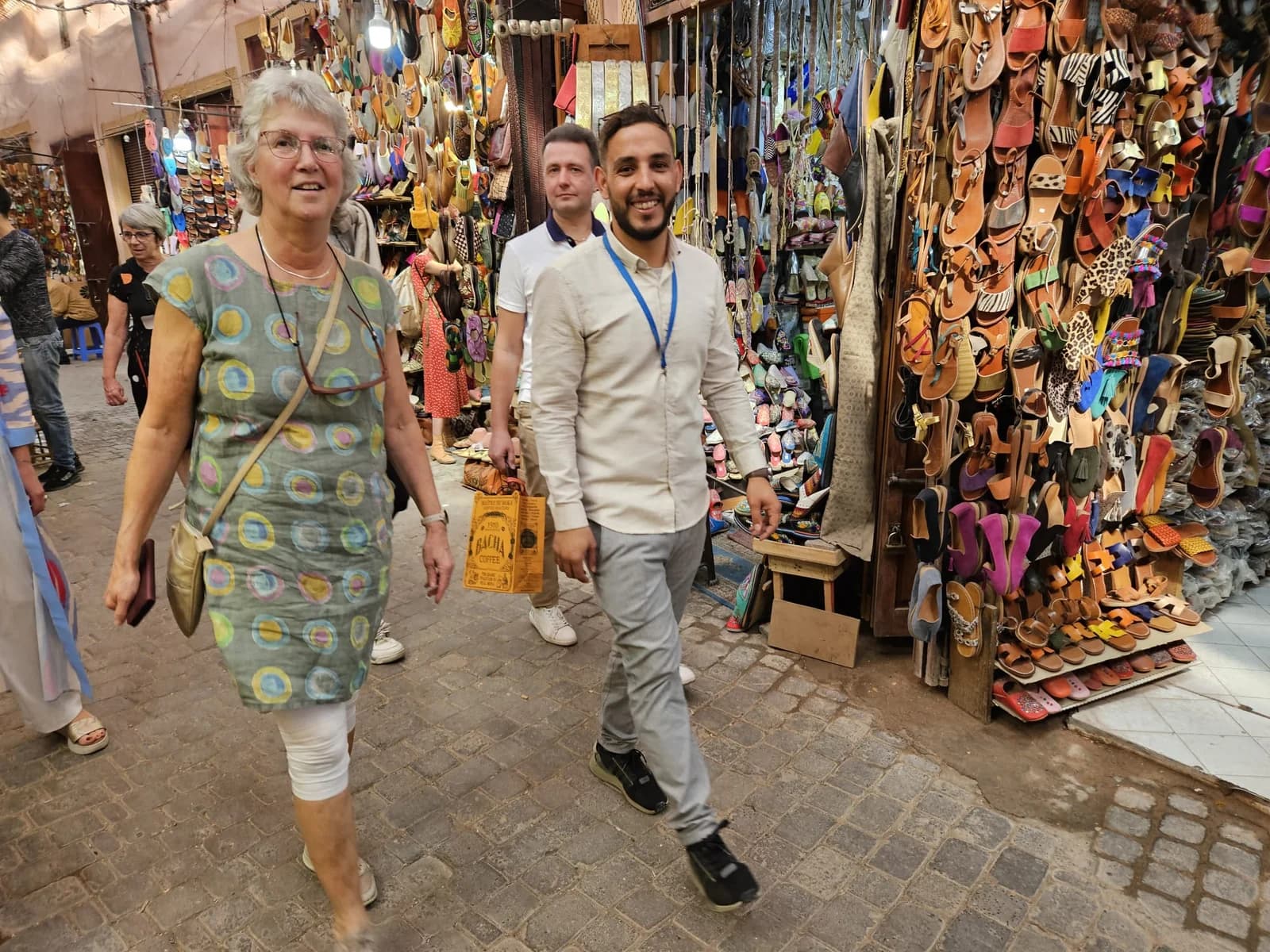
The old city is a network of major souk lanes, neighbourhood streets and smaller passages. GPS can help, but it does not remove the need to read signs, landmarks and pedestrian flow.
Start with Jemaa el-Fna, Koutoubia, the Kasbah/Mellah side and the main souk spine. Once those anchors make sense, getting temporarily lost becomes less stressful.
Use a guide for orientation, not dependency
A good first-day city tour should explain how the city fits together, not simply walk you from ticket office to ticket office. We normally orient guests around major landmarks, heritage areas and working souks so they can return independently later.
Mosque interiors are generally not open to non-Muslim visitors, so Koutoubia and other mosques are usually explained from outside.
Cash, tickets and small purchases
Cards are increasingly common in hotels and formal shops, but cash still matters for smaller purchases, tips and some entry situations. Carry manageable amounts rather than relying on one payment method.
Prices and ticket rules can change, so we confirm current entrance arrangements before a guided visit rather than publishing permanent numbers in a general guide.
Dress for weather and context
There is no single visitor uniform. Lightweight clothing works in hot weather, but shoulders and knees covered in more conservative settings is a sensible baseline. In winter and shoulder seasons, evenings can be much cooler than the daytime sun suggests.
Fridays, Ramadan and working souks
Friday can change the rhythm of artisan areas because some workshops reduce activity or close for prayer and family time. During Ramadan, opening patterns and energy levels also shift across the day.
This does not make those days bad for visiting; it means the route should be adapted rather than pretending every craft section operates identically seven days a week.
Shopping without pressure
The souks are commercial spaces as well as cultural ones. If you want to buy, decide what you are actually looking for before entering a long negotiation. If you do not want to shop, say so.
Morocco Travelogue separates guiding from forced shopping. A dedicated private shopping tour is available when sourcing carpets, textiles, spices or crafts is genuinely part of the day.
How we would structure a first stay
- Day 1: orientation and core historical areas
- Day 2: slower medina time, gardens or a specific interest such as food or Jewish heritage
- Day 3: optional day trip to the Atlas, Essaouira, Agafay or Ouzoud
- Keep at least one unscheduled block for wandering, cafés and returning to places you liked
Frequently asked questions
Is Marrakech easy to walk?
The medina is highly walkable, but surfaces, heat, crowds and navigation can make it tiring. Taxis or private transport are useful for locations outside the old city.
Can non-Muslims enter mosques in Marrakech?
Most active mosques, including Koutoubia, are not open to non-Muslim visitors. They can still be understood through exterior architecture and historical context.
Are the souks open on Friday?
Many shops remain open, but some artisan production areas reduce activity. A guided route should be adjusted if seeing working crafts is important.
Start Marrakech with orientation, not overwhelm
If you want a private introduction built around history, navigation and your own interests, tell us when you arrive and what you care about most.
See the private city tour →