
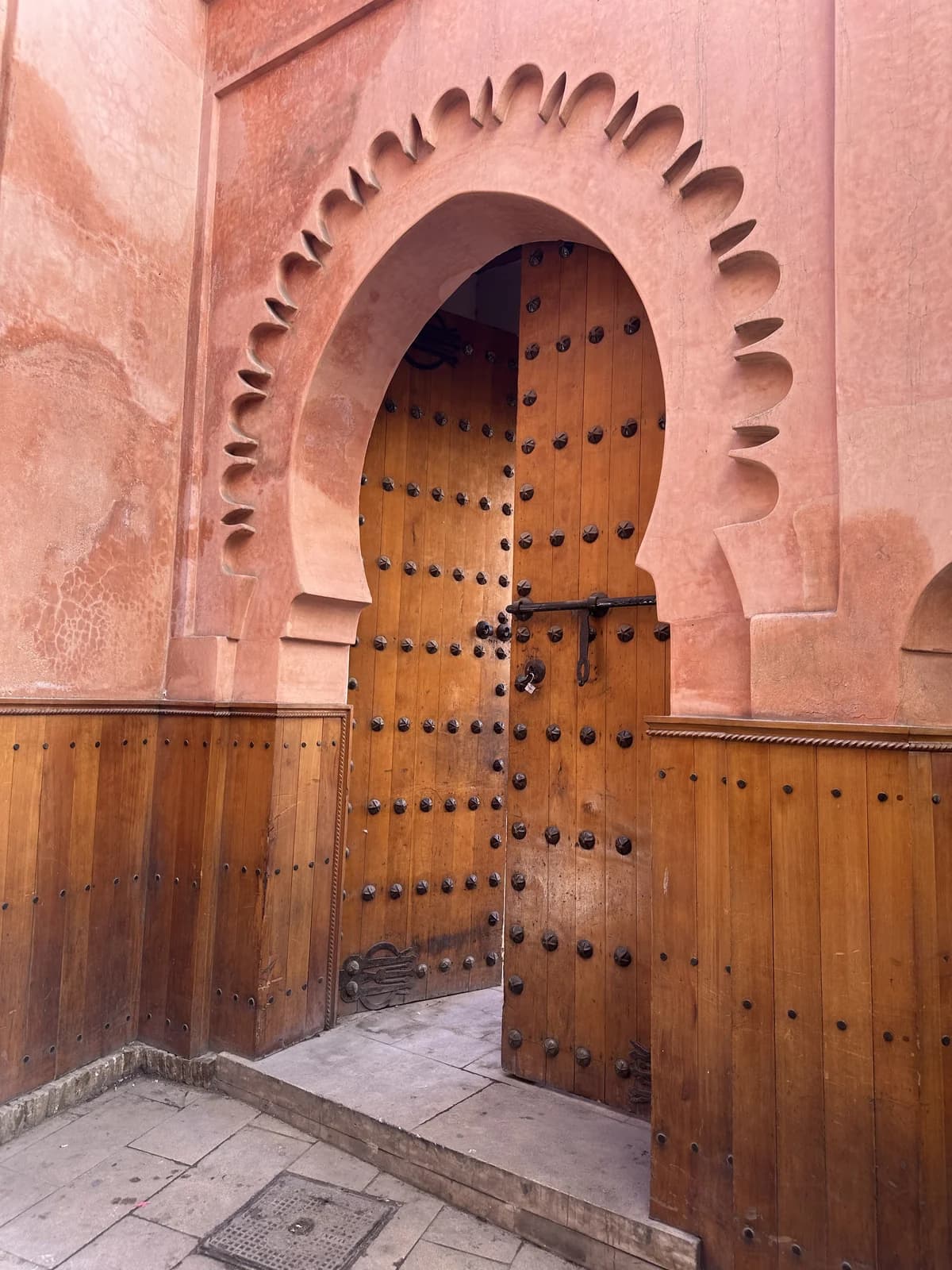
What the Mellah is
Mellah is the name used for historic Jewish quarters in several Moroccan cities. Marrakech’s Mellah developed beside the royal and administrative areas south of the main medina.
Today it is a living neighbourhood. Jewish history is one important layer, but present-day residents and businesses should be treated with the same respect as anywhere else in the city.
Why the location matters
The Mellah sits near the Kasbah, Saadian Tombs, Bahia Palace and older royal districts. That geography helps explain relationships between power, commerce, skilled trades and minority communities better than treating the Jewish quarter as an isolated theme.
Synagogues and religious sites
Synagogue access, opening hours and visitor rules can change, so we confirm them locally rather than promise every interior on every departure. Dress and behaviour should reflect that these are religious and memorial spaces, not simply photo locations.
Jewish–Muslim coexistence needs nuance
Moroccan Jewish history includes long periods of coexistence, shared cultural practices, economic connections and also episodes of restriction or insecurity. A useful tour should avoid turning that complex history into either a romantic slogan or a story of permanent conflict.
A practical three-hour heritage route
Our private Jewish history walk can connect Bab Agnaou and the Kasbah context with the Saadian Tombs area, the Mellah, spice market streets and Bahia Palace surroundings. Private transportation can be included when it improves access or connects the route to accommodation outside the medina.
The route can be adapted around current religious-site access and the guest’s specific family or historical interests.
Photographs and respect
Ask before photographing people, especially in working markets or near religious spaces. The most valuable part of a heritage visit is understanding relationships and memory, not collecting images of every doorway.
Frequently asked questions
Is there still a Jewish quarter in Marrakech?
Yes. The historic Mellah remains a named neighbourhood, though it is now a living mixed urban area rather than an exclusively Jewish quarter.
Can visitors enter synagogues?
Some sites receive visitors, but opening times and access can change. Confirm on the day and follow the rules of each religious space.
How long does a Jewish heritage tour need?
Around three hours is enough for a focused private route in the Kasbah/Mellah area, with more time useful if you want deeper museum or archival context.
Explore the Mellah with historical context
Tell us whether your interest is general history, architecture, religious sites or family heritage. We can shape the private route around that focus.
See the heritage walk →