
Morocco’s Jewish history in context
Jewish communities contributed to Moroccan life in different cities and periods through trade, scholarship, religious practice, craft and music. A heritage trip should explain this varied history rather than flatten it into a single story.
The Mellah of Marrakech
Marrakech’s Mellah offers an important starting point for discussing Jewish Moroccan history, neighborhood change and religious heritage. Our existing Jewish Marrakech guide covers the city in greater detail.
Jewish heritage in Fes
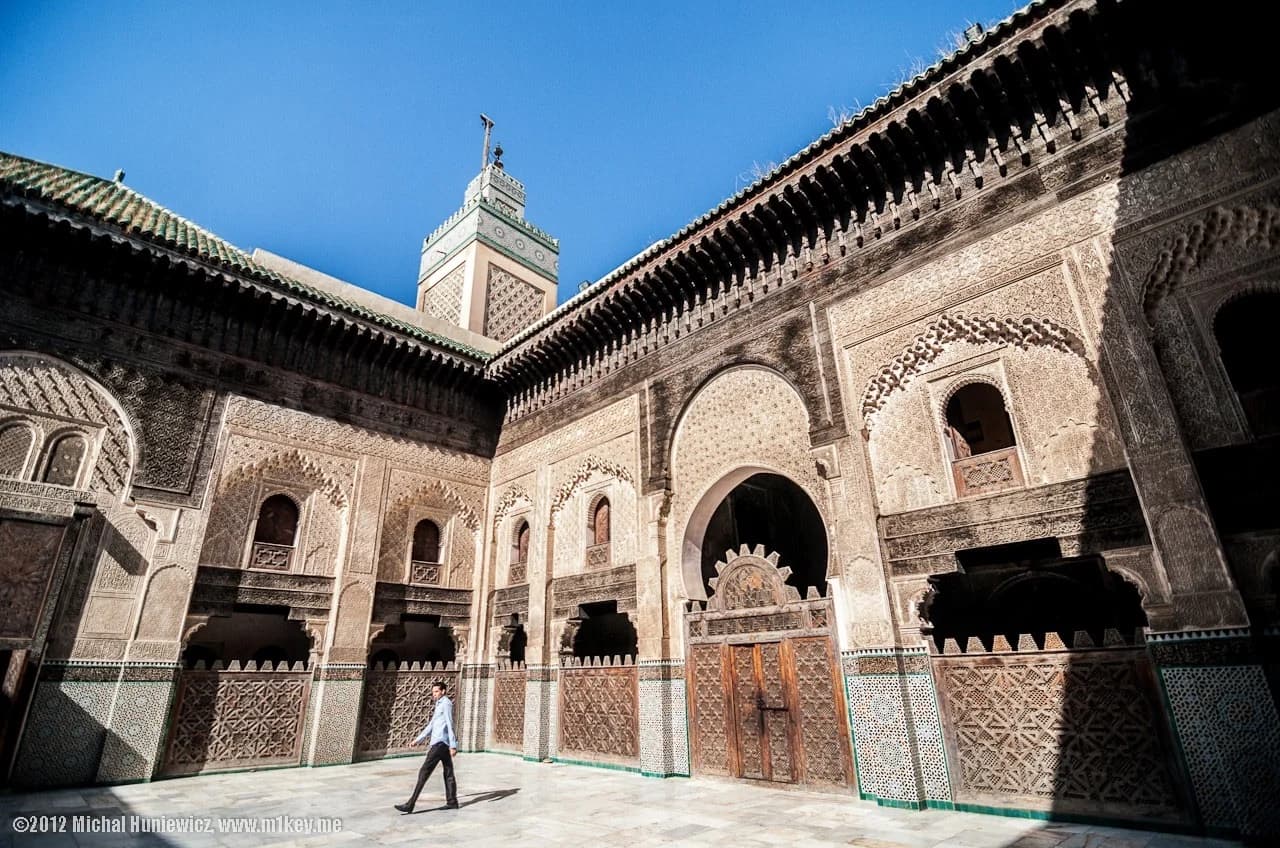
Fes provides a different imperial-city context. A thoughtful tour explains the Mellah, its relationship with the wider city and how historical sites are used today.
Essaouira’s Atlantic history
Essaouira connects Jewish Moroccan history to Atlantic commerce and urban cultural exchange. An overnight visit can provide more time for interpretation than a rapid excursion.
Casablanca and modern Jewish Morocco
Casablanca reflects more modern periods of Moroccan Jewish history. Specific institutions, collections and religious sites may have visitor policies or security arrangements that change.
Planning respectful visits
Verify site access and opening hours, ask permission before photographing people or religious interiors, and tailor the route to personal interests such as family heritage, architecture or community history.
A four-city route without rushing
A heritage-focused itinerary might start in Casablanca, travel to Fes, continue to Marrakech and finish in Essaouira, depending on arrival and departure airports. Those cities are far enough apart that realistic overnight stays matter; avoid compressing the route into a series of photo stops.
Choose the order around confirmed site access and the interests of the travelers. Visiting a cemetery or learning about a family’s former neighborhood may be more meaningful than checking off every museum.
Synagogues, cemeteries and visitor etiquette
Some synagogues are active religious spaces; others are preserved heritage buildings with distinct visitor policies. Ask before entering, photographing interiors or arranging a group visit. Opening times and entry arrangements should be confirmed directly, not inferred from old travel blogs.
Respectful cemetery visits require sensitivity and sometimes a local contact or prior approval. Avoid moving objects or photographing people without consent.
Shared traditions without oversimplifying history
Moroccan Jewish communities and their neighbors contributed to diverse traditions in music, language, cuisine and commerce. Their relationships varied across centuries and cities; avoid implying one simple, uniform past.
A well-informed local guide should distinguish historical records, community memory and uncertain anecdotes. This is especially important for visitors interested in genealogy or specific former homes.
Questions to ask a heritage-tour operator
Ask which sites are planned, which require advance permission, how entrance arrangements work, who provides historical interpretation, and whether visits coincide with religious observances or closures.
If researching family roots, share the city or locality and approximate historical period first. Do not promise that ancestral records or buildings can be located without verified information.
Frequently asked questions
Can this experience be included in a private Morocco itinerary?
Usually a route can be shaped around your interests, subject to practical travel time, suitable suppliers and availability.
Should I confirm details before booking?
Yes. Ask about route duration, access, accommodation, inclusions and local conditions before finalizing plans.
Request a private Morocco itinerary
Tell us your preferred travel dates and interests so we can discuss a realistic route.
Plan my journey →