Planning a trip to Morocco can be exciting but also a bit overwhelming. To make it easier, we’ve compiled the most common questions tourists ask along with clear answers.
Most tourists from Europe, the US, Canada, and many other countries do not need a visa for stays up to 90 days. You only need a passport valid for at least six months from your travel date. Always check your country’s regulations before booking.
The official currency is the Moroccan Dirham (MAD).
Cash is widely used, especially in markets and small shops. Credit cards are accepted in larger hotels, restaurants, and stores, but not everywhere. ATMs are available in major cities.
Moroccans primarily speak Darija (Moroccan Arabic influenced by Amazigh), Amazigh (Berber languages), and French.
English is commonly spoken in tourist areas, hotels, and by guides. Learning a few phrases like “Salam” (hello) or “Shukran” (thank you) is appreciated.
Morocco is generally safe for travelers. Petty theft can occur in crowded areas, so keep your belongings secure.
Avoid poorly lit streets at night, and always have travel insurance. Tap water may not be safe to drink — bottled water is recommended.
Taxis: Petit taxis are good for city travel, grand taxis for longer trips.
Public transport: Buses and trains connect most cities.
Car rentals: Renting a car provides flexibility but be aware of local driving rules.
Riads: Traditional Moroccan houses with courtyards, perfect for authentic experiences.
Hotels: 3–5 star options are available in major cities.
Guesthouses/Hostels: Budget-friendly options exist in all tourist hubs.
Booking in advance is recommended, especially in peak season (spring and fall).
Moroccan cuisine is flavorful and generally safe. Popular dishes include tagine, couscous, pastilla, and Moroccan mint tea.
Street food is good if the stall is busy and clean. Bottled water is advised over tap water.
Dress modestly, especially in rural areas and religious sites.
Non-Muslims can usually only view mosques from the outside.
Tipping is customary: 5–10% in restaurants and for guides.
Bargaining in markets is expected.
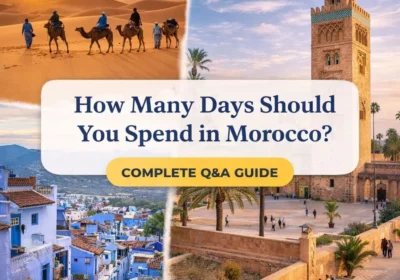
Marrakech: Souks, palaces, and gardens.
Fes: Historic medina and artisan workshops.
Chefchaouen: The Blue City, famous for its picturesque streets.
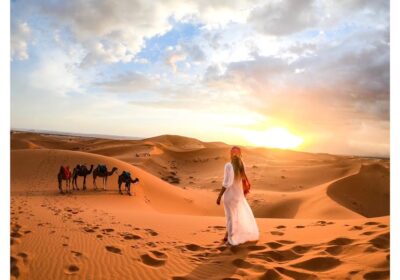
Sahara Desert: Camel treks and overnight desert camps.
Atlas Mountains: Hiking, Berber villages, and stunning landscapes.
Hiring a local guide is recommended to explore safely and access hidden gems.
Best time to visit: Spring and fall for pleasant weather.
Souvenirs to buy: Argan oil, spices, carpets, and ceramics.
Cash: Carry small bills for taxis, tips, and markets.